Finger Measurement Methods for Accurate Ring Sizing
Getting the correct ring size is very important because even a small difference can make a ring feel too tight or too loose. Scientific studies and professional jeweler standards confirm that finger size is not fixed. It changes slightly during the day due to temperature, hydration, blood flow, and physical activity.
Each finger on the human hand also has a different size and structure. For example, the ring finger is usually slightly smaller than the index finger, and the dominant hand is often a little larger than the non-dominant hand. That is why ring sizing must always be based on direct finger measurement, not guesswork.
Professional jewelry sizing systems are based on precise physical measurements such as:
- Circumference (around the finger)
- Diameter (inside ring width)
- Fit pressure (knuckle passage)
These are standardized in international jewelry sizing systems, including ISO-based ring size charts.
Table of Contents
Understanding Finger Types and Ring Fit Differences
Before measuring, it is important to understand that each finger has a different natural size and shape:
- Thumb → thickest finger, not used for standard rings
- Index finger → usually larger due to frequent use
- Middle finger → often the longest and one of the widest
- Ring finger → standard finger used for engagement and wedding rings
- Pinky finger → smallest finger, requires lower ring size
NOTE: Even the same person can have 0.5 to 1 full size difference between fingers. That is why ring measurement must always be finger-specific.

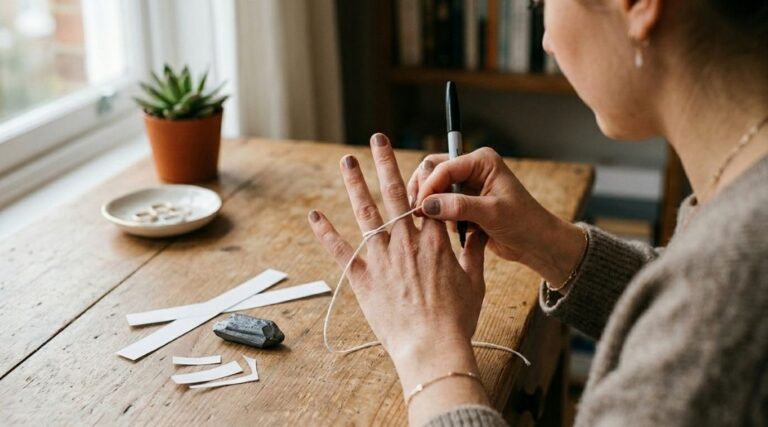
1. String or Paper Strip Method
Basic Circumference Method
This is one of the most common home measurement techniques.
How it works:
- Take a non-stretchable paper strip or dental floss
- Wrap it around the base of the target finger
- Keep it snug but not tight
- Mark where it overlaps
- Measure length in millimeters using a ruler
- Match it with a standard ring size chart
Scientific principle:
This method measures finger circumference, which is directly used in ring sizing systems.
Accuracy notes:
- Paper gives more reliable results than string
- Elastic materials should never be used (they stretch and distort results)
- Best measured when hands are at normal temperature
Jewelers recommend measuring in the evening because fingers are naturally slightly larger at that time.
2. Ring Diameter Measurement
Highly Accurate Method
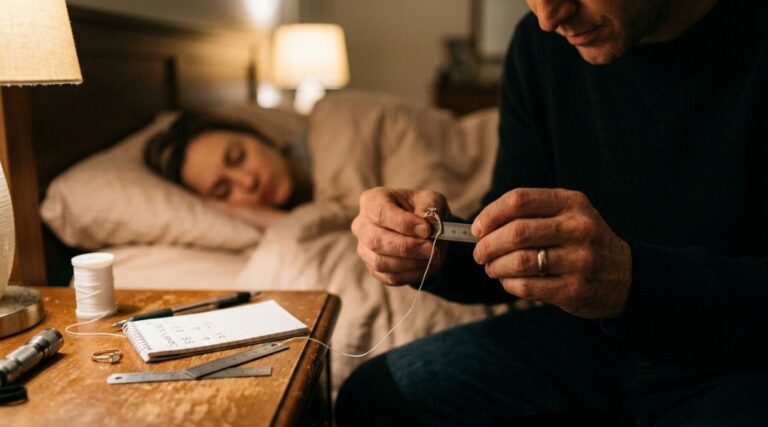
If you already have a well-fitting ring, this method is more precise.
How it works:
- Take a ring that fits the correct finger
- Place it on a flat surface
- Measure the inner diameter using a ruler or caliper
- Compare with a standard ring size chart
Scientific basis:
This method is based on geometric diameter-to-circumference conversion, which is highly accurate in physics-based measurement systems.
Why it is reliable:
- Removes human error from wrapping methods
- Not affected by finger swelling
- Used by professional jewelers for calibration
Important: The ring must match the same finger type and similar band width for accurate conversion.
3. Professional Ring Sizer Tools
Gold Standard Method
This is the most accurate method used in jewelry stores.
Tools include:
- Metal or plastic ring sizer sets
- Adjustable ring gauges
- Ring mandrel sticks
How it works:
- Try multiple ring sizes physically
- The correct size should:
- Pass over the knuckle with slight resistance
- Sit comfortably at the base of the finger
Scientific importance:
Professional tools account for:
- Finger shape differences
- Knuckle width
- Real-life wearing pressure
Jewelry institutes consider this the most reliable method because it tests actual fit behavior, not just measurement.
4. Temperature and Body Condition Effect
Scientific Factor
Finger size changes naturally due to biological and environmental conditions.
Scientific facts:
- Warm weather → fingers expand slightly
- Cold weather → fingers shrink
- Exercise or salt intake → temporary swelling
- Morning vs evening → noticeable size difference
This is due to blood circulation and fluid retention changes in soft tissue.
Best practice:
- Measure at room temperature
- Avoid measuring after exercise or sleep
- Repeat measurement 2–3 times for accuracy
5. Knuckle vs Finger Base Measurement
Critical Fit Factor
Many people ignore this, but it is scientifically very important.
How it works:
- Measure the base of the finger
- Measure the knuckle width
- Choose a size that passes the knuckle but fits the base comfortably
Why it matters:
Even if a ring fits the base, it must still pass through the knuckle. Otherwise, it will not go on properly.
This method ensures functional fit, not just numerical accuracy.
6. Multi-Measurement Verification Method
Most Reliable Overall
The most scientifically accurate approach is combining methods.
Steps;
- Measure finger using paper/string method
- Confirm using ring diameter method
- Verify with professional ring sizer (if available)
- Compare all results
Why this works:
It reduces errors caused by:
- Finger swelling
- Measurement mistakes
- Material stretching differences
This follows the scientific principle of cross-verification (calibration accuracy method).
Important Scientific Tips for Accuracy
To ensure correct ring sizing:
- Always measure in millimeters (mm)
- Avoid elastic materials
- Measure 2–3 times for consistency
- Consider ring width (wide rings feel tighter)
- Do not rely on height, weight, or assumptions
Studies show ring sizing can vary by fractions of a millimeter, which can change comfort significantly.
Conclusion
Finger measurement is a precise physical process, not guesswork. It is based on scientific principles of circumference, diameter, and fit behavior.
Each finger has its own size and structure, and factors like temperature and knuckle width also affect ring fitting.
When the above methods are used correctly, they ensure a perfect, comfortable, and accurate ring fit every time.

Zara Fatima is a fashion writer with a love for exploring trends and styles. She enjoys researching fashion and sharing her insights to help others discover and enjoy unique pieces. Zara also loves creating dough jewelry, turning her passion into beautiful, wearable art.