From Alhambra to High Jewelry: How Van Cleef & Arpels Designs Become Collectibles
Van Cleef & Arpels occupies an unusual position in luxury jewelry. Its most recognizable creations are accessible enough to be worn regularly, yet distinctive enough to attract serious collectors. From a mother-of-pearl Alhambra bracelet to a one-of-a-kind Mystery Set necklace, the maison creates pieces that retain a clear identity across different materials, periods, and levels of rarity.
The story begins at Place Vendôme, where Alfred Van Cleef and Charles Arpels established the maison in 1906. From its early years, the company combined technical experitse with a playful visual language inspired by flowers, dancers, animals, couture, and good-luck symbols. This balance matters in the secondary market because collectors are not simply buying precious stones. They are buying designs that can be immediately connected to a particular house.
Alhambra Made the Brand Instantly Recognizable
Introduced in 1968, the first Alhambra long necklace featured 20 clover-shaped yellow-gold motifs with beaded borders. The design arrived during a period when women were embracing more relaxed, wearable jewellry. Rather than reserving fine pieces for formal occasions, clients could layer long necklaces with everyday fashion.
The motif was simple, optimistic, and easy to recognize. Its association with luck also reflected Jacques Arpels’ habit of collecting four-leaf clovers. The origins of the Alhambra collection help explain why the design became more than a seasonal success.
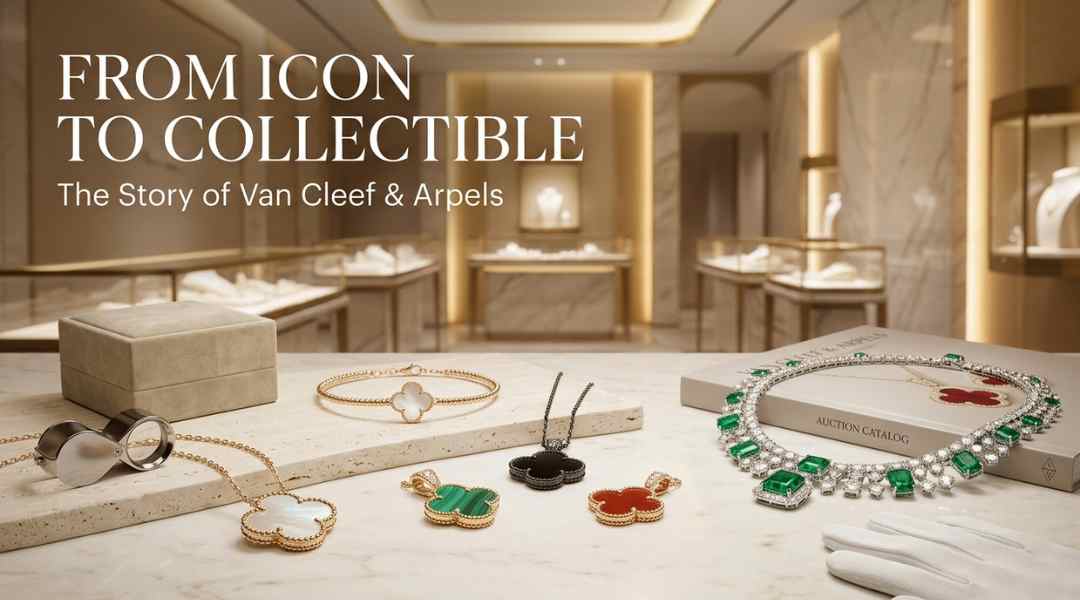
And the maison continued to reinterpret it. Vintage Alhambra retained the classic proportions, while Sweet Alhambra introduced smaller motifs and Magic Alhambra experimented with asymmetry and varied sizes. Materials such as onyx, malachite, carnelian, turquoise, lapis lazuli, mother-of-pearl, and guilloché gold gave buyers numerous ways to build personal collections.
According to the maison’s own history of the Alhambra collection, the original necklace achieved immediate international recognition. That continuity supports collectibility. Buyers can identify the design across decades, while differences in stone, production period, condition, and rarity create clear distinctions between common and exceptional examples.
Materials Can Turn Familiar Designs Into Rare Finds
Not every Alhambra jewel has the same collector value. Standard pieces in current production are generally easier to replace. Discontinued stones, unusual color combinations, limited editions, and well-preserved vintage examples tend to inspire stronger competition.
Natural materials also create variation. Two malachite motifs may display completely different banding, while mother-of-pearl changes appearance depending on its iridescence and surface quality. Coral and turquoise examples can be especially desirable because sourcing standards, availability, and production decisions have changed over time.
Auction prices therefore reflect more than gold weight or retail price. The most expensive Van Cleef & Arpels bracelets sold at auction often combine rare gemstones, strong provenance, historical design, and workmanship that would be difficult to reproduce.
High Jewelry Adds Technical Rarity
At the top of the market, Van Cleef & Arpels becomes far more than a maker of recognizable motifs. Its high jewelry pieces demonstrate engineering, stone selection, movement, and transformation.
The maison patented its Mystery Set technique in 1933. Carefully cut stones slide into hidden metal rails, allowing rubies, sapphires, or emeralds to cover a surface without visible prongs. Van Cleef & Arpels describes the Mystery Set technique as one of its defining jewelry-making achievements.
But technical complexity alone does not create a collectible. The best pieces also communicate an idea. Flower clips appear to open, ballerina brooches seem to move, and feathers curve around the body. Transformable jewels may convert from necklaces into bracelets, clips, or pendants, giving them an element of surprise.
Provenance and Design History Drive Auction Demand
Signed jewelry usually receives more attention when it has a documented connection to a notable owner, important commission, or recognized design period. Original boxes, certificates, workshop numbers, and archival references can strengthen that history.
Collectors also pay close attention to condition. Replaced stones, damaged hardstone motifs, altered clasps, shortened chains, and heavy polishing can reduce appeal. A vintage jewel with intact hallmarks and original components offers a clearer connection to the period in which it was made.
Major auction houses reinforce the maison’s cultural standing by presenting its work alongside rare gemstones and historic jewelry. Christie’s identifies Alhambra, the Zip necklace, and the Mystery Set among the house’s most recognizable Van Cleef & Arpels designs. Sotheby’s has also documented multimillion-dollar results for rare creations, including a 1929 diamond Tie necklace that sold for $3.6 million in 2024, according to its review of the most expensive Van Cleef necklaces.
Collectibility Exists at Several Price Levels
A collector does not need to begin with a unique high jewelry necklace. Entry-level collecting can focus on an Alhambra material that has been discontinued, an unusual vintage clip, or a signed piece with excellent documentation.
The strongest collections usually have a clear point of view. One person may concentrate on lapis lazuli Alhambra pieces, while another follows animal brooches or transformable jewels. Buying purely because a design is currently popular can be risky. Condition, rarity, authenticity, and long-term personal appeal remain more reliable criteria.
Van Cleef & Arpels designs become collectibles because they combine repetition with reinvention. Alhambra offers a familiar symbol that changes through material and scale. High jewelry introduces rare stones, complex techniques, and imaginative movement. Together, these qualities give collectors something essential, a design language that remains recognizable while leaving room for discovery.

Zara Fatima is a fashion writer with a love for exploring trends and styles. She enjoys researching fashion and sharing her insights to help others discover and enjoy unique pieces. Zara also loves creating dough jewelry, turning her passion into beautiful, wearable art.