What Is the Average Engagement Ring Size?
What is the average engagement ring size? Discover U.S. and global averages, carat trends, costs, and what size most couples choose today.
Have you ever searched “what is the average engagement ring size?” on Google? You’re not alone. It is one of the most popular jewelry queries. The truth? There isn’t one single answer. The average is based on place, budget, trends, and even social media influence. However, let us examine what consumers are actually selecting in the present day, and what it would mean to you.
Table of Contents
The National Average Carat Size in the U.S.
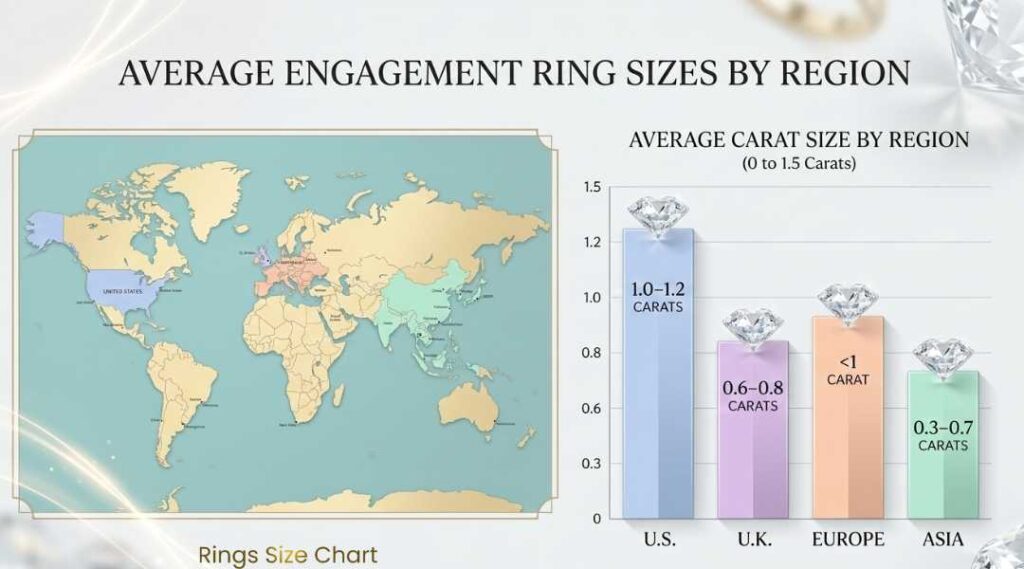
The engagement ring or promise rings center stone is between 1.0 and 1.2 carats in the United States on average. That size has been steady over the years, as it is a sweet spot:
- Noticeable without being overwhelming
- Elegant for everyday wear
- Within reach for many budgets
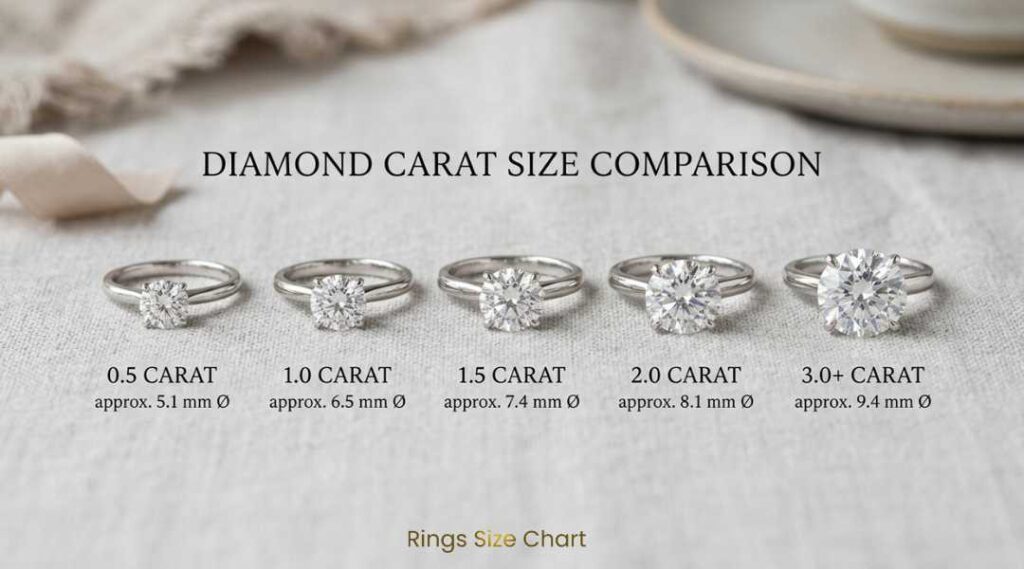
A one-carat diamond that is cut well usually has a diameter of about 6.5 mm, thus providing rigorous coverage to the fingers without being oversized. The way this appears can still vary depending on finger size variation and hand proportions, which changes overall visual impact.
And anything over 1.5 carats begins to shift into the category of “larger than average”, and at 2 carats and beyond will be bold or statement-level in the eyes of most customers.
Average Engagement Ring Size Outside the U.S.
The numbers shift internationally.
- United Kingdom: Around 0.60–0.80 carats
- Europe (general): Often under 1 carat
- Asia: Typically 0.30–0.70 carats
It is heavily dependent on cultural tastes and spending styles. In most nations, there is a preference for subtle elegance and not size. These differences are also influenced by do ring sizes vary by brand, since sizing consistency can change depending on manufacturer standards across regions.
Carat vs. Visual Size: They’re Not the Same
This is something not very well known by most individuals: carat is not the visible size; it is weight. Two 1-carat diamonds can be the same, yet appear totally different based on:
- Cut quality
- Shape
- Depth percentage
- Setting style
When the diamond is cut poorly, it may appear smaller than a well-cut 1-carat diamond. This is why the size is no longer the main determinant of making a ring impressive. It is all about brilliance and proportions.
Diamond Shape Changes Perceived Size
Certain shapes always appear bigger naturally at the same carat weight as compared to others.
Shapes That Appear Larger:
- Oval
- Marquise
- Emerald
- Pear
These elongated shapes cover more surface area, creating the illusion of a bigger stone.
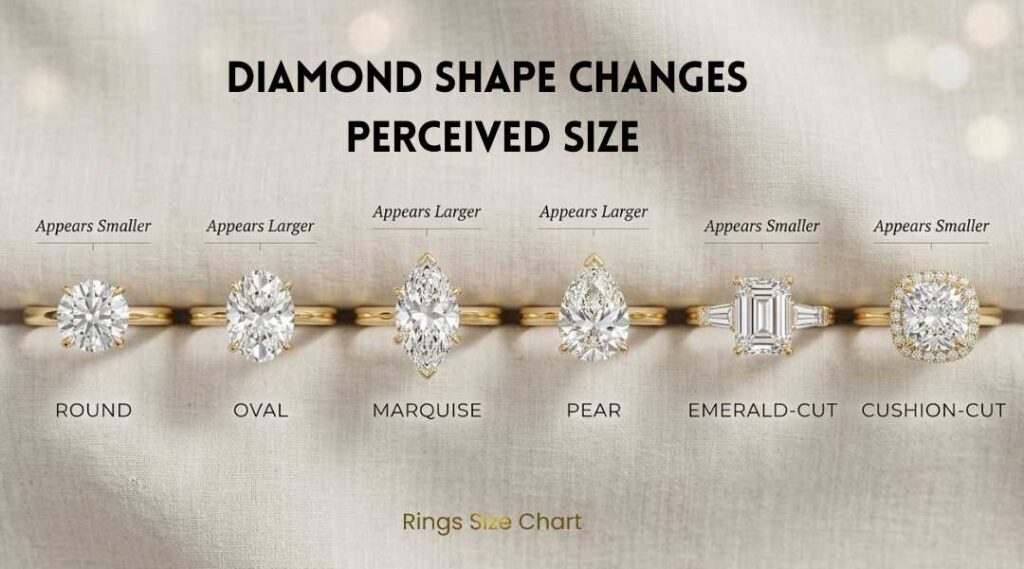
Shapes That Appear Slightly Smaller:
- Round brilliant
- Cushion
The most popular are round diamonds, since they are heavier in depth and will give a slight reduction in spread as compared to the elongated shapes. So when someone says, “Is 1 carat too small?” the real question is: Which shape?
Social Media Influence on Ring Size
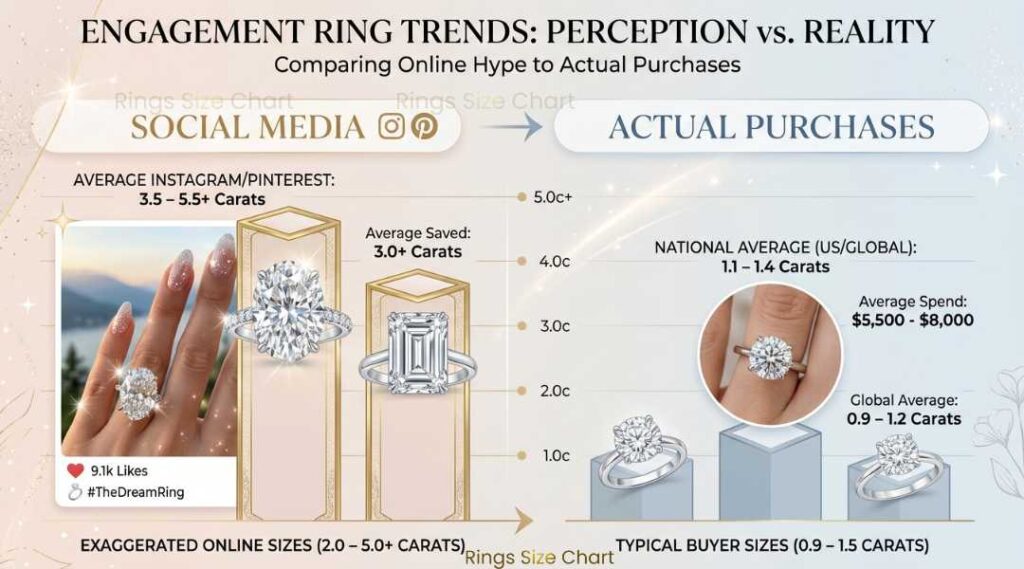
Larger diamonds are becoming more visible on Instagram and Pinterest. Celebrity rings (5 + carats and above) are a kind of making normal look distorted. As a matter of fact, the 3-carat diamond is far beyond the ordinary range of a common consumer. When one witnesses large rings every day, a 1-carat stone might appear small online; however, it is the most popular in the real world.
What Is Considered “Big”?
In practical terms:
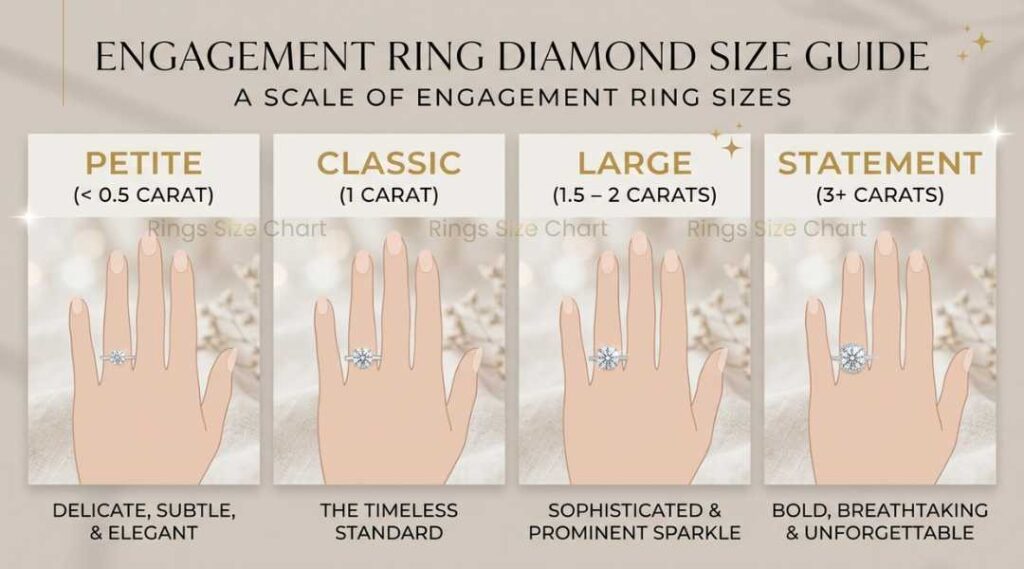
- Under 0.5 carats: Petite
- 1 carat: Classic average
- 1.5–2 carats: Noticeably large
- 3+ carats: Statement piece
But finger size matters too. A 1-carat diamond set on a size 4 finger appears to be very big in comparison to the same carat on a size 8 finger. If you’re unsure about your measurements, you can quickly estimate it using our ring size calculator.
Coverage percentage, “the percentage of the width of the finger which the diamond covers,” tends to be a more important determinant of appearance than raw carat weight.
Is Bigger Always Better?
Not necessarily. The bigger diamond with poor cut quality may appear dull. A slightly smaller diamond with a good cut can glisten and shine and look more magnificent. Many buyers prioritize:
- Excellent cut
- Near-colorless grades
- Clean clarity
- Balanced proportions
So, it is not the size that makes it beautiful! So, it is not the size that makes it beautiful. This is closely related to how ring sizing works in terms of fit, structure, and overall balance, which affects both comfort and visual appearance.
So, What Is the Average Engagement Ring Size?
To summarize current trends:
- United States average: 1.0–1.2 carats
- Global average: Under 1 carat
- Most purchased size range: 0.9–1.5 carats
Before choosing a diamond size, it is important to understand proper sizing through how to measure ring size correctly at home, especially when professional tools are not available. If you don’t have professional tools, you can still measure at home.
However, the correct size should be based on the lifestyle, cost, proportions of the hands, and personal style. A one-carat diamond will always be eternal, harmonized, and popular. Bigger stones are getting increasingly popular due to lab-grown products, yet they remain an exception among the majority of customers. Ultimately, the average is simply a figure. What is more important is the way the ring appears, feels, and the way that it represents a person. And it will never be a matter of statistics.

Zara Fatima is a fashion writer with a love for exploring trends and styles. She enjoys researching fashion and sharing her insights to help others discover and enjoy unique pieces. Zara also loves creating dough jewelry, turning her passion into beautiful, wearable art.