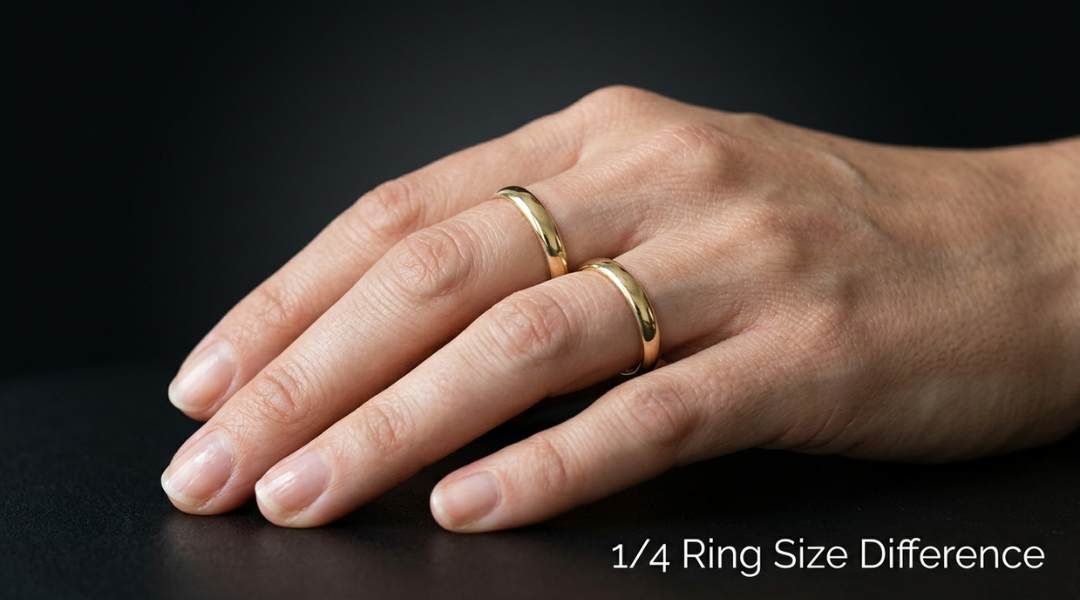
Do Ring Sizes Vary by Brand?
Find out why do ring sizes vary by brand? Since comfort and fit are everything with respect to rings, a single measure will alter everything in terms of rings.
You get a ring ordered on one brand, and it fits perfectly. Then you purchase another ring, of the same size, another brand, and it feels tight, or it feels loose. So what’s going on? Do ring sizes vary by brand? The simple answer is: they are not supposed to, but they do. And when this happens, there is a reason why. Here are the reasons for sizing differences and what you need to know before making a purchase.
Table of Contents
Ring Sizes Are Supposed to Follow Standard Systems
In most countries, ring sizing follows standardized measurement systems.
For example:
- United States & Canada: Numerical sizes (6, 7, 8, etc.)
- United Kingdom: Letter-based sizes (L, M, N, etc.)
- Europe: Circumference in millimeters (like 52, 54, 56)
For anyone unsure about their exact measurement, learning how to measure ring size at home can help ensure accurate sizing before buying from any brand.
The sizes are allocated unique inner circumference measurements. In the U.S., the inside circumference of any half-size forms a slight increment. Theoretically, the inner circumference of a 7 of one brand ought to be the same as the inner circumference of a 7 of another brand. However, the experience of the real world sometimes differs.
Why Ring Sizes Can Feel Different Between Brands
Even when two rings are technically the same size, they will not feel the same. This is affected by a number of factors. This is especially common when switching between different jewelry brands in the USA.
Manufacturing Tolerances
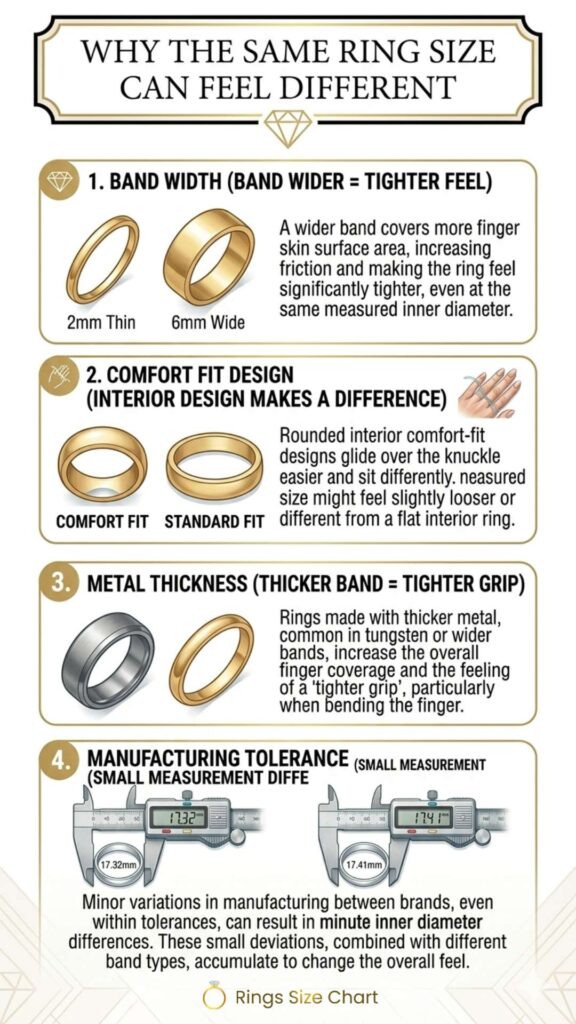
None of the mass-produced products is the same. Minor manufacturing changes can lead to small differences in internal diameter or band shape. A matter of millimeters will even influence the tightness of a ring. Premium jewelers tend to be more restrictive than mass-market or fast-fashion jewellery brands.
Band Width Changes the Feel
Band width is one of the largest causes of variance in rings when it comes to brand. A 2mm band of size 7 will be more loosely fitted than a wide band of size 6mm of size 7, yet still both bands may have the same inner circumference. The larger the rings are, the larger the area covered by them on your finger, and the greater the resistance. It is the reason why most jewelers suggest increasing the bandwidth by a half and a half. Thus, when a brand focuses on thin and elegant rings, and another is famous with statement bands, the same numerical figure can be very different.
This effect is often seen in different types of rings with varying designs and widths. If you’re unsure about the correct fit, using a ring size calculator can help estimate the best size before purchasing.
Ring Shape and Interior Design
Not all rings are perfectly flat on the inside. Some brands use a “comfort fit” design, where the inside of the band is slightly rounded. This curved interior makes the ring slide on more easily and feel slightly roomier. A traditional flat interior band may feel snugger by comparison, even in the same size. If one brand uses comfort-fit bands and another doesn’t, that alone can create noticeable sizing differences. This is commonly seen in modern styles such as promise rings with comfort-fit designs.
Metal Thickness and Structure
Fit is also dependent on the thickness of the band. A heavy and sturdy ring can seem tight in comparison to a slim, light band. In some cases (such as tungsten or titanium) the metals are made thicker to make them durable, and this can change the fit of the ring on your finger a little. Although the circumference may be technically the standard sizing, the overall fit may differ. These variations are often more noticeable in smart and wearable styles like Oura ring size variations.
International Size Conversions
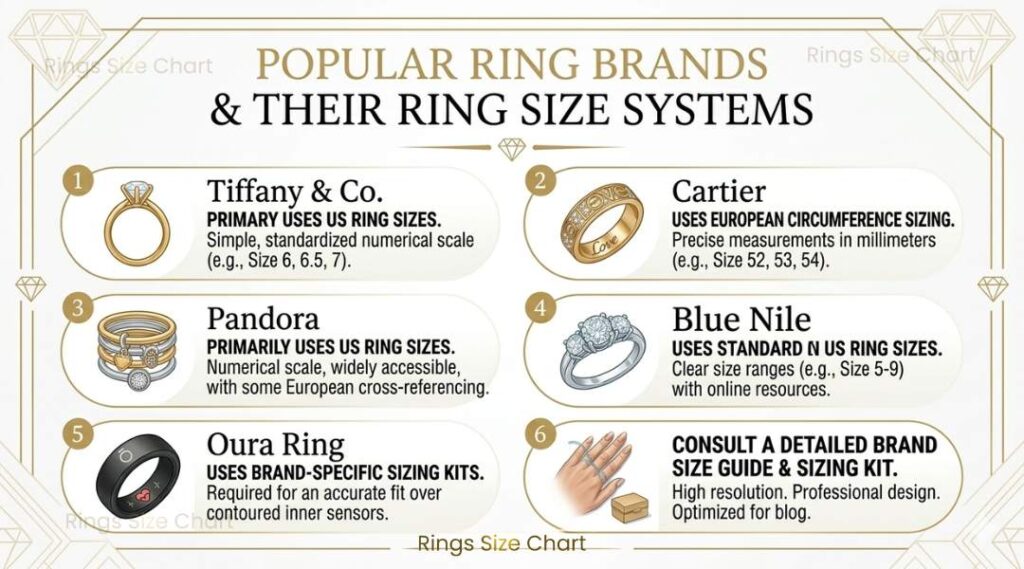
Internationally manufactured brands may also change systems between sizes. As an example, an American size seven translated into a European size can be rounded off slightly in the conversion process. Such differences in the rounding may cause small inconsistencies. When a brand is produced in another country and sizing charts are translated, that might be the reason why the size does not fit so precisely as the domestic jeweler.
How to Avoid Sizing Surprises
If you’re buying from a new brand, it helps to:
- Check whether the band is comfort-fit or flat
- Consider the width of the ring
- Review sizing charts carefully
- Read customer reviews about fit
- Ask about resizing policies
It also helps to compare sizing with average engagement ring size trends before making a final decision. If you’re between sizes, the ring’s width and design should guide your choice. You can also verify your measurement using a printable ring size chart before ordering online.
Final Thoughts
So, do ring sizes vary by brand? Ring sizes are standardized technically, with their inner circumference being measured accurately. However, in reality, the size of the same size may feel a little different, due to such issues as bandwidth, comfortable-fit design, metal thickness, manufacturing variations, and foreign conversions. A difference in this case does not always imply that the sizing system is in error. It also tends to imply that the design of the ring determines its comfort on your finger. Since comfort and fit are everything with respect to rings, a single measure will alter everything in terms of rings.

Zara Fatima is a fashion writer with a love for exploring trends and styles. She enjoys researching fashion and sharing her insights to help others discover and enjoy unique pieces. Zara also loves creating dough jewelry, turning her passion into beautiful, wearable art.